If you meticulously care for your dog or cat’s diet—investing time in balancing meals, selecting high-quality proteins, or researching natural raw diets—there is a question you have probably asked yourself upon reaching the treat aisle at the supermarket: Why are treats so different from main meals?
It is a contradiction seen daily: pet owners who strive to eliminate grains, by-products, and additives from the main bowl, yet reach for the first colorful bag they find when it comes to rewarding good behavior.
Today, we break down the most harmful myths surrounding the commercial pet treat industry. We will explore what those popular snacks actually contain and why, in many cases, you might be rewarding your companion with ingredients their digestive system was never designed to handle.
The Myth of the “Harmless Treat”
The conventional pet food industry has done an outstanding marketing job: equating treats with love—”If I give them this treat, I love them”. The problem is that behind this message lies a nutritional reality far removed from the biological needs of a carnivore.
When we analyze a bag of conventional commercial snacks, we find ingredients that trigger alarms for any veterinary nutritionist:
Grains and complex carbohydrates: Corn, wheat, or puffed rice. These are inexpensive ingredients used as structural fillers for treats, yet they provide an excess of starch and sugars that dogs simply do not need.
Hidden sugars: Glycerin, molasses, or glucose syrups are added to enhance texture and make treats more addictive to a pet’s palate.
Artificial preservatives (BHA, BHT, Ethoxyquin): Although legally permitted, there is growing scientific concern regarding their cumulative, long-term health effects.
Animal by-products and “meals”: When labels list “meat by-products,” they often refer to parts devoid of biological value, such as beaks, feathers, hooves, or poorly digestible tissues.
What Happens When You Feed These Treats to a Dog or Cat?
If your pet is already on a natural diet, their digestive system functions as a balanced environment. Their gastric pH is acidic, and their gut microbiome is optimized to process pure animal protein. Introducing an industrial snack packed with chemicals triggers a disruptive effect:
Silent inflammation: An excess of refined carbohydrates and artificial preservatives can trigger systemic inflammatory processes. Unexplained allergies and chronic skin flare-ups often trace back to an overload of additives in daily rewards.
Disrupted microbiome: Grains and added sugars feed harmful gut bacteria, crowding out beneficial flora and hindering nutrient absorption.
Resistance to satiety: Added sugars create an addictive cycle, causing your dog or cat to reject simple, wholesome foods and become increasingly picky or fussy with their everyday meals.
The Process as a Guarantee of Quality
The myth that a “natural treat” carries bacterial risks fades away when human-grade technology is introduced. In our facilities, we operate under strict IFS (International Featured Standards) guidelines.
This is far from simply “sun-drying fish”. It is a precise industrial dehydration process using hot air. By removing moisture evenly, we achieve:
Absolute food safety: The product is completely safe both for your pet to consume and for you to handle.
Natural shelf life: No artificial preservatives are needed, as eliminating moisture serves in itself as the ultimate natural preservative.
Purity: We preserve the structural integrity of proteins, vitamins, and, most importantly, Omega-3 and Omega-6 fatty acids in their biologically active state.
Start Rewarding Health, Not Just Calories
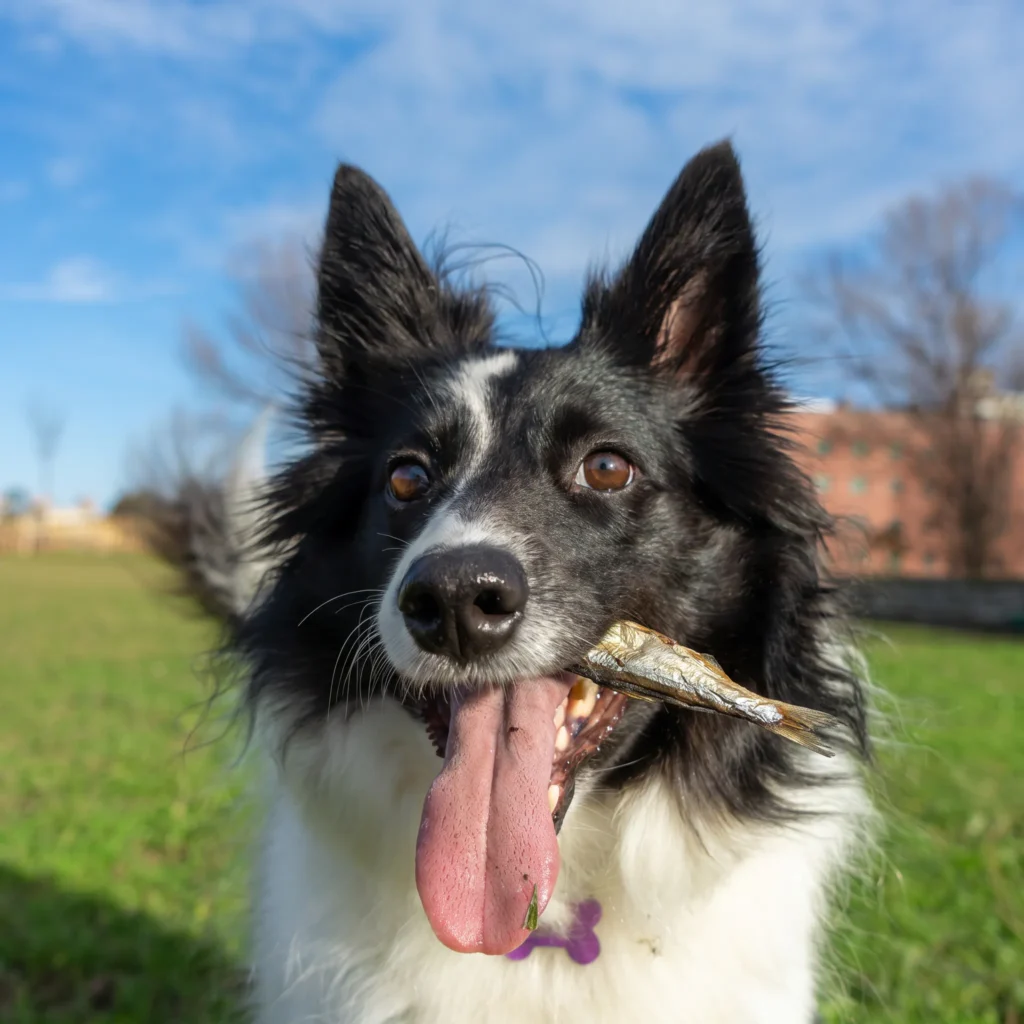
The mindset shift is simple yet transformative: stop seeing treats as empty rewards and start seeing them as an opportunity to supplement. Every time you hand over a piece of dehydrated blue whiting, you are offering health.
The conventional kibble industry has conditioned us to choose what is easy and cheap. But as a responsible pet owner, you know that whatever you save today on poor-quality treats, you will pay tomorrow in veterinary bills.
Your pet does not need sugars, grains, or artificial colorants to be happy. They need a genuine bite, an aroma that connects with their primal instincts, and the reassurance of knowing that what you feed them is 100% real.
Will You Join the Transition Toward Natural Feeding?
Cutting processed treats out of your dog or cat’s routine is the final step to complete the circle of a healthy life. We invite you to experience the difference. Once you see how your pet responds to the pure scent of the Cantabrian Sea and witness the benefits in their skin and digestion, there will be no turning back.